



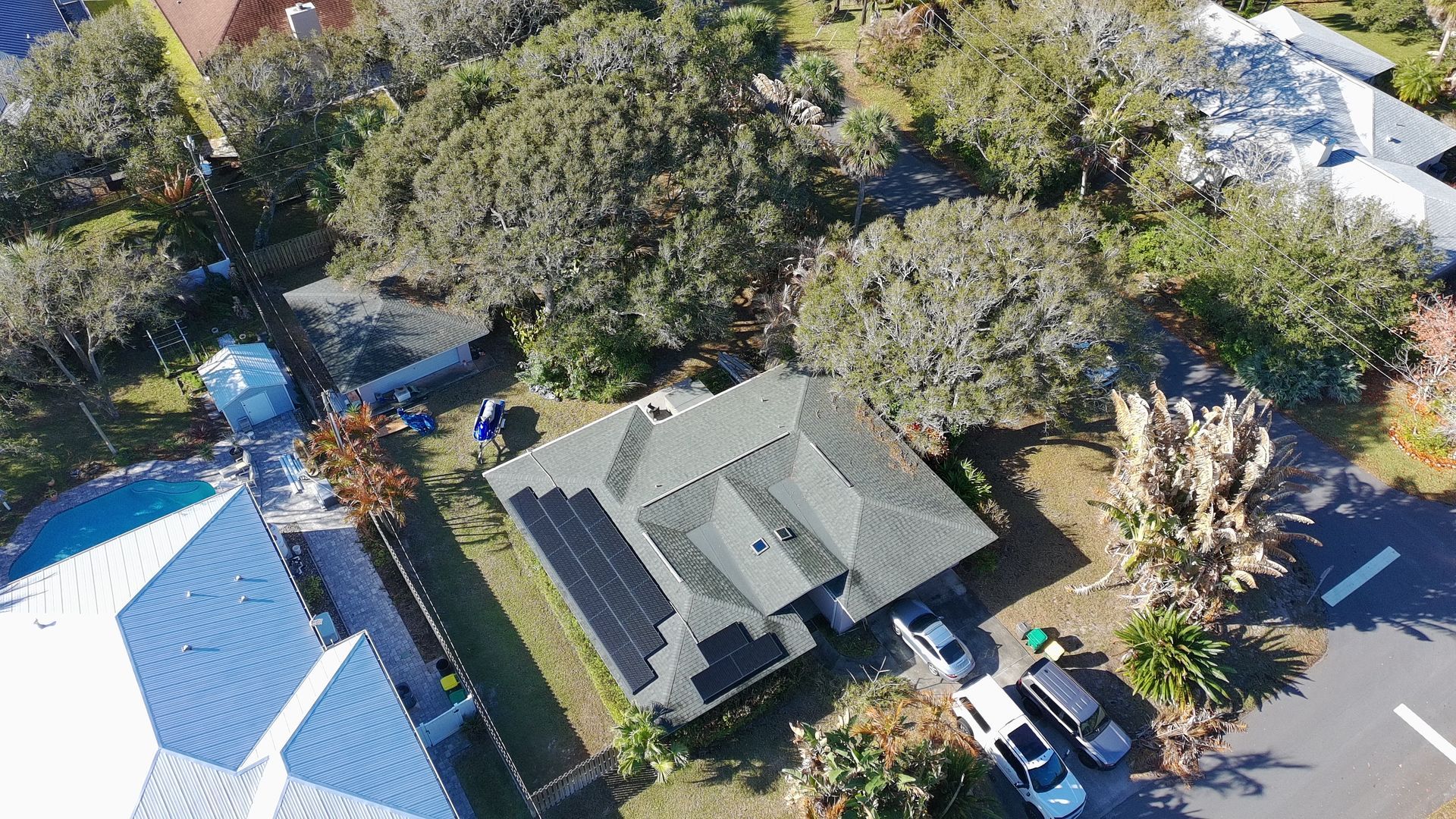
SOLAR DETACH AND RESET DURING ROOF REPLACEMENT
A roof with solar is a coordinated roofing and electrical project. The cleanest result comes from defining responsibilities, schedules, warranties and attachment details before anyone removes a panel.
QUICK ANSWER
Solar panels usually need to be safely disconnected and removed before the roof covering beneath them is replaced. A qualified solar provider handles the photovoltaic equipment, while the roofing contractor completes the roof system. The array is reinstalled only after the new roof is ready and the attachment plan has been coordinated.
WHY PANELS CANNOT SIMPLY STAY IN PLACE
Roof replacement requires access to the roof covering, underlayment, flashing and deck. Panels, rails, wiring and attachment points block that access. Roofing around an installed array leaves old material beneath the system, creates awkward transitions and prevents a complete inspection of the covered deck.
Removal also allows the roofer to examine penetrations, flashing and concealed damage. Leaks blamed on the roof may originate at solar attachments, while unrelated roof defects may be hidden beneath the array. The scope needs to address both systems without guessing.
FIRST DETERMINE WHO OWNS THE SOLAR SYSTEM
Ownership affects who can authorize work and which contract controls removal. A homeowner-owned array may allow the owner to hire a qualified solar contractor. A leased system, power-purchase agreement or financed equipment package may require the original provider or an approved service company.
Locate the solar agreement, equipment list, installer information, monitoring records and warranty documents before scheduling roof replacement. Ask whether third-party removal changes workmanship, equipment, production or roof-penetration warranties. If the installer is no longer operating, contact the manufacturer or financing provider and document the response.
WHAT A DETACH-AND-RESET SCOPE SHOULD INCLUDE
- System shutdown and electrical safety procedures.
- Panel, rail, optimizer, inverter and wiring identification.
- Photographs and labeling before disassembly.
- Safe removal, handling and weather-protected storage.
- Responsibility for damaged or obsolete components.
- Removal or abandonment of old roof attachments.
- New layout, attachment and flashing method.
- Code-required permits and inspections.
- System testing, monitoring reconnection and production verification.
- Separate solar and roofing workmanship warranties.
A one-line “remove and replace solar” allowance is too vague. The number of panels, equipment condition, roof type, access, storage and provider requirements can all affect the price.
The scope should also state how long removed equipment can remain stored, who carries insurance while it is off the roof and what happens if testing reveals a failed panel or inverter. A reset price based on reusing every component can change when aged hardware breaks during disassembly. Written unit prices or an approval process for replacement parts prevents an open-ended argument.
THE RIGHT PROJECT SEQUENCE
- DOCUMENT: Record system ownership, equipment, warranties, production and existing roof conditions.
- COORDINATE: Confirm the roofer, solar provider, permit needs, dates and weather contingency.
- SHUT DOWN: The qualified solar team safely de-energizes and disconnects the system.
- DETACH: Panels and related components are labeled, removed and stored securely.
- REPLACE: Driftline completes the roof, deck repairs, underlayment, flashings and finish work.
- RESET: The solar provider installs the approved attachment and flashing system on the new roof.
- VERIFY: The system is inspected when required, energized, tested and reconnected to monitoring.
Build schedule flexibility into the plan. Rain, deck repairs, permit timing, equipment damage or unavailable replacement parts can delay the reset. Do not promise same-day reinstallation until the roof is complete and conditions are ready.
ROOFING DETAILS TO SETTLE BEFORE REINSTALLATION
The new attachment plan should match the roof type, structural layout and solar racking requirements. Penetrations need compatible flashing, waterproofing and placement that does not compromise shingle, tile or metal roofing details. Rail and panel layout must preserve required access and avoid blocking drainage paths or service points.
Ask who marks rafters or trusses, who installs flashings, who seals penetrations and who owns a leak if it develops at an attachment. The answers should be written into the scopes. The Department of Energy recommends asking solar installers who is responsible if roof damage or leaks develop. That is not a minor contract detail.
COSTS HOMEOWNERS OFTEN MISS
The detach-and-reset price may exclude storage, replacement hardware, broken tiles, updated racking, electrical upgrades, permit fees, monitoring service or repairs to damaged equipment. Older arrays may contain discontinued panels or connectors. Removing aged equipment can expose brittle wiring or failed components that were not visible beforehand.
Insurance involvement does not guarantee detach-and-reset coverage. If roof damage is part of a claim, ask the insurer whether solar removal, reset, loss of production or damaged equipment is included. The roofer cannot decide coverage. For a clearer overview, read Understanding Florida Roof Claims.
USE THE PROJECT TO PREVENT THE NEXT TEAR-OFF
The U.S. Department of Energy advises homeowners to consider roof age and remaining life when planning solar. If a roof is already near replacement, installing solar first can create avoidable removal and reinstallation costs later. When replacement and solar work are coordinated, equipment life and roof life can be aligned more intelligently.
Before the array goes back, obtain completion photos of the uncovered roof and new attachment locations. Save the roof warranty, solar warranty, permits, final inspection documents, equipment serial numbers and monitoring confirmation in one file. Those records matter for future service, claims and home sales.
Review future service access too. Inverters, junction boxes, conduit routes, vents and drainage paths should remain reachable. A tightly packed layout may maximize panel count but make roof or equipment maintenance harder. The final arrangement must follow applicable code and manufacturer rules, yet it should also leave a practical way to inspect and service both systems.
If the roof condition is uncertain, begin with a documented roof inspection before scheduling either trade.
FREQUENTLY ASKED QUESTIONS
CAN ROOFERS REMOVE SOLAR PANELS?
Only if they have the required qualifications and the solar contract permits it. Electrical and photovoltaic work should be handled by appropriately qualified professionals.
HOW LONG WILL MY SOLAR SYSTEM BE OFFLINE?
It depends on scheduling, roof duration, inspections, weather and equipment issues. Get a coordinated written schedule with realistic contingencies.
CAN THE SAME SOLAR ATTACHMENTS BE REUSED?
Do not assume so. The solar provider and racking manufacturer should determine whether hardware is compatible, serviceable and approved for reuse.
WHO IS RESPONSIBLE FOR A LEAK AFTER THE RESET?
That should be defined in the roofing and solar contracts based on where and why the leak occurs.
WILL INSURANCE PAY FOR DETACH AND RESET?
Possibly in some covered losses, but the policy and insurer decide. Request written confirmation instead of relying on a contractor’s promise.
SHOULD I REPLACE AN AGING ROOF BEFORE INSTALLING NEW SOLAR?
Often that is more efficient. Compare the roof’s remaining life with the expected solar-system life before making the investment.
OFFICIAL CONSUMER RESOURCES
U.S. DOE HOMEOWNER’S GUIDE TO SOLAR ↗ U.S. DOE SOLAR INSTALLER GUIDE ↗COORDINATE THE ROOF BEFORE PANELS COME OFF
Driftline Roofing will document the roof scope and coordinate roofing milestones so the solar provider knows when the new system is ready for reinstallation.
PLAN YOUR ROOF REPLACEMENTThis article provides general roofing education and is not legal, insurance or engineering advice. Coverage decisions are made by the insurance carrier under the individual policy.